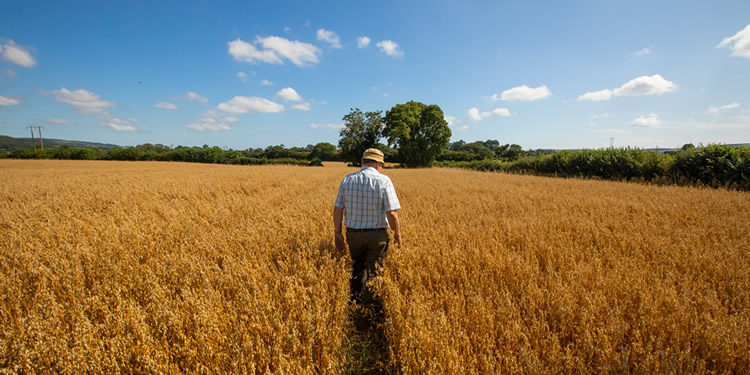
Cereals have always played a great part in human nutrition and oats, more than any of the others, have the greatest nutritional value with many health giving benefits.  

THE IMPORTANCE OF FIBRE
More and more people are increasingly aware of the need to improve their dietary intake of fibre. However, not everyone is aware that there are different types of fibre - Soluble and Insoluble – and each type has different health benefits.

INSOLUBLE FIBRE
Wheat Bran contains Insoluble fibre which cannot be digested by the body. It absorbs water and adds bulk to the body's waste material. This bulk stimulates the onward movement of food in the intestine. Sources of Insoluble fibre include: wholemeal bread, cereals, rice, pasta, rye, seeds, lentils, chick peas, and nuts.

SOLUBLE FIBRE
Oat Bran is one of the few foods that contains a high level of soluble fibre and it appears that this soluble fibre, by increasing the excretion of bile acids from the body, reduces blood cholesterol. Thus, when these acids are excreted, more cholesterol is used by the liver to replace them. The more acids made, the more cholesterol is drawn out of the body and so there is less chance of cholesterol being deposited in the arteries.
A fibre high diet should be complemented by an adequate intake of fluid, i.e. water, tea and fruit juices. Other foods that contain soluble fibre are beans, root vegetables, fibrous green vegetables, stone fruits, grapes, bananas and apples.

Nowadays people are taking a greater interest in managing their own health and becoming aware of the specific benefits of oats. Oats are rich in insoluble fibre which is important for good digestion. Oats are also high in soluble fibre which protects against heart disease and lowers cholesterol. It is low in sugar, fat and salt, making Flahavan's a completely natural cereal. 

Most other types of cereals mainly contain insoluble fibre, but oats have a good balance of both. Flahavan's Oat products contain significant levels of soluble fibre with Flahavan's Oat Bran being particularly rich in soluble fibre. 

The United States Food and Drug Administration recently endorsed these benefits when they ruled to allow health claims on the labels of food containing soluble fibre from oats, noting that these foods "as part of a diet low in saturated fat and cholesterol may reduce the risk of heart disease". 


WHY DOES YOUR CHILD NEED OATS?

Oats contain many of the essential nutritional requirements for young children to set them up for the day. These include:

  • Starch: Oats contain about 65% starch. The starch contained in oats is particularly easy to digest which makes this food so important in the nutrition of children.

  • Fat: Typically 5.5% compared with 2% in wheat, 3.8% in corn, 0.65% in rice. (These are average values). Children have a higher need for essential fatty acids. When a child is fed 4 oz of rolled oats you will satisfy at least one third of its daily requirements in these essential fatty acids! Oats do better than other cereals.

  • Protein: Typically 11%. Among the nutrients of a given cereal the most important is the protein. Both the quality as the quantity (composition of the essential amino acids) of the essential amino acids in oats make them preferable to other cereals. Again oats do better than other cereals.

  • Calories: Calories in oats from carbohydrate, fat and protein: 405 kcal/100gram. Oats are an excellent source of energy!

  • Minerals and Vitamins: Calcium and Iron stand out as elements, which are better represented in oats than in other cereals. Both are of particular importance for the nutrition of children and pregnant women. Certain trace elements like Zinc and Manganese are available to a somewhat greater extent than in other cereals and contribute to the daily requirements of the body. The vitamin contents of oats are similar to that of other cereals, except for the higher amount of thiamin. 

Nutritional benefits of oats for Coronary Heart Disease

Both medication and diet are used to help decrease the risk of coronary heart disease, however diet is usually the first approach.

Many studies, which have focused on the beneficial effects of oat fibre, have found that eating increased oat fibre resulted in a lowering of blood cholesterol.

In 1997, after an extensive review of 42 clinical trials, the US Food and Drug administration recognised the lipid-lowering effects of oats. They now permit a health claim, which states that ‘soluble fibre from foods such as oat bran, rolled oats or oatmeal and whole oat flour, as part of a diet low in saturated fat and cholesterol, may reduce the risk of heart disease”

Oat Bran is one of the few foods that contain a high level of soluble fibre. The main component of the soluble fibre of oats, which also brings the main part of the physiological effects, is called ß-glucan, located in the endosperm cell walls. Oats provide one of the richest sources of ß-glucan (4.5 – 7g per 100g serving). It appears that this ß-glucan, by increasing the excretion of bile acids from the body, reduces blood cholesterol. Thus, when these acids are excreted, more cholesterol is used by the liver to replace them. The more acids made, the more cholesterol is drawn out of the body and so there is less chance of cholesterol being deposited in the arteries. A fibre high diet should be complemented by an adequate intake of fluid, i.e. water, tea and fruit juices. Other foods that contain soluble fibre are beans, root vegetables, fibrous green vegetables, stone fruits, grapes, bananas and apples.

In addition to the cholesterol lowering effect of oats, their association with a lower risk of coronary heart disease (CHD may be explained by the effects of vitamin E and folate as well as effects on glucose and insulin responses. Whole grain oats have a low glycaemic index. When they are eaten the rise of blood glucose is low, allowing more even blood glucose control. The antioxidant vitamins found in wholegrains are known to protect against cell damage, a process involved in heart disease.

Nutritional Table:


Per 100g Progress 
Oatlets
Jumbo  20% 
Added Bran
OatBran Pinhead
Energy 1613.3kJ 1613.3kJ 1529kJ 1595kJ 1613.3kJ
386.6kcal 386.6kcal 362kcal 378kcal 386.6kcal
Protein 11.1g 11.1g 11.7g 14g 11.1g
Carbohydrate 73g 73g 69.9g 67g 73g
(of which Sugars) 1.3g 1.3g 1.4g 1.2g 1.3g
Fat 5.5g 5.5g 6.9g 60g 5.5g
(of which saturates) 1.1g 1.1g 1.4g 1.2g 1.1g
Fibre (by Englyst) 6.1g 6.1g 6.7g 15g 6.1g
(of which: Soluble) 2.7g 2.7g 3.2g 10g 2.7g
(of which: Insoluble) 3.4g 3.4g 3.5g 5g 3.4g
Sodium Trace Trace Trace Trace Trace
Thiamin (B1) 0.85g 0.85g 0.41mg 1.13mg 0.85g
Iron 4.1mg 4.1mg 4.14mg 5.4mg 4.1mg

HEALTHY WEB-LINKS:

Here are some web links to other sites that contain useful information on health related issues:

IRELAND:

EUROPE:

UNITED STATES:


© 2000 E. Flahavan and Sons Limited, Kilnagrange Mills, Kilmacthomas, County Waterford, Ireland. Please review our site statement which includes our disclaimer, copyright notices, and our privacy policy. Comments or suggestions should be sent to webmaster@flahavans.com